

By WellHealtrix Research Team
Published: May 20, 2026
When we think about modern healthcare, we often think about treating diseases after they appear. We take pills for high blood pressure, use inhalers for asthma, and undergo complex treatments for chronic illnesses. But what if we told you that the vast majority of modern chronic conditions—including Type 2 diabetes, cardiovascular diseases, fatty liver, and even Alzheimer’s—share a single, common cellular root?
That root is Metabolic Dysfunction.
Your metabolism is not just a mechanism that determines how fast you digest a meal or whether you have a fast or slow body type. It is the complex sum of every chemical reaction happening inside your cells to convert the food you eat into the cellular energy that keeps you alive. When your metabolism functions optimally, you experience boundless energy, effortless weight management, and sharp cognitive focus. When it breaks down, your entire body suffers.
At WellHealtrix, we believe that preventative care is the truest form of medicine. In this masterclass guide, we will break down the exact science of metabolic health, explore the hidden dangers of insulin resistance, look deep into your cellular powerhouses (mitochondria), and provide an actionable lifestyle blueprint to bulletproof your metabolic system.
Chapter 1: The Foundations of Metabolic Health
To understand metabolic health, we must first define what it looks like. Shockingly, recent global health data indicates that less than $12\%$ of the adult population is considered metabolically healthy. The remaining $88\%$ are living with some form of metabolic damage, often without even realizing it.
1.1 The Five Pillars of Metabolic Health
In clinical medicine, metabolic health is measured by five specific bio-markers. If any of these metrics fall outside the optimal range, it indicates that your metabolism is struggling:
| Bio-Marker | Clinical Risk Range | Optimal Health Target |
| Fasting Blood Glucose | $\ge 100 \text{ mg/dL}$ | Under $90 \text{ mg/dL}$ |
| Blood Pressure | $\ge 130/85 \text{ mmHg}$ | Under $120/80 \text{ mmHg}$ |
| Triglycerides | $\ge 150 \text{ mg/dL}$ | Under $100 \text{ mg/dL}$ |
| HDL Cholesterol (“Good”) | $< 40 \text{ mg/dL}$ (Men) / $< 50 \text{ mg/dL}$ (Women) | Above $50 \text{ mg/dL}$ (Men) / $60 \text{ mg/dL}$ (Women) |
| Waist Circumference | $\ge 40 \text{ in}$ (Men) / $\ge 35 \text{ in}$ (Women) | Less than half your height in inches |
When an individual meets three or more of the risk criteria listed above, they are diagnosed with Metabolic Syndrome. This condition drastically increases the probability of developing life-altering chronic conditions.
Chapter 2: The Silent Enemy – Insulin Resistance Explained
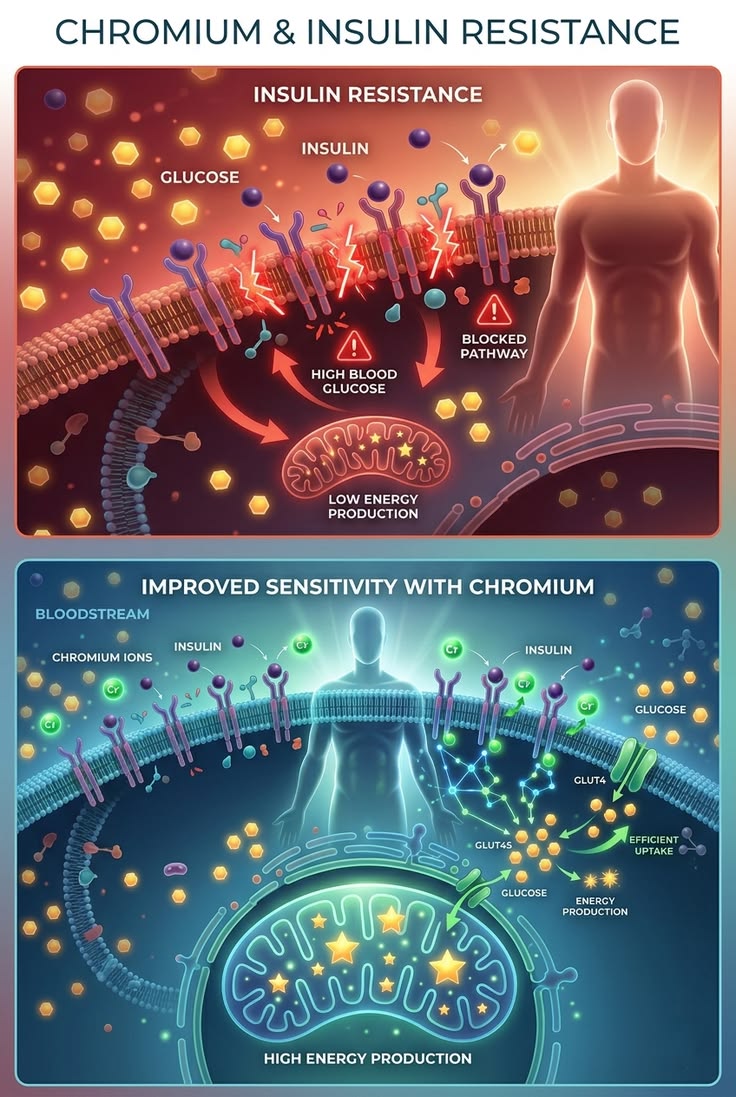
At the very heart of metabolic dysfunction lies a hormonal condition known as Insulin Resistance. To understand this silent epidemic, we must look at how your body handles energy on a cellular level.
2.1 The Lock-and-Key Mechanism
Whenever you consume carbohydrates or proteins, your digestive tract breaks them down into a simple sugar called glucose, which enters your bloodstream. Your brain detects this rise in blood sugar and signals your pancreas to secrete a hormone called insulin.
Think of insulin as a master key. Its job is to travel through your bloodstream, knock on the doors of your muscle, liver, and fat cells, and unlock them so that glucose can leave the blood and enter the cells to be burned for energy.
                  ┌────────────────────────────────────────┐
                  │      THE INSULIN-CELLULAR MECHANISM     │
                  └───────────────────┬────────────────────┘
                                      │
           ┌──────────────────────────┴──────────────────────────┐
           ▼                                                     ▼
   HEALTHY SENSITIVITY                                  INSULIN RESISTANCE
 (Normal Key Function)                                (Broken Lock/Cell Jam)
 • Pancreas releases normal insulin.                 • Chronic high carbohydrate intake.
 • Cells unlock easily.                              • Lock becomes jammed (fat overflow).
 • Glucose enters cell seamlessly.                    • Pancreas pumps excess insulin.
 • Blood sugar stabilizes instantly.                 • Unused glucose stored as body fat.
2.2 How the Lock Gets Jammed
If you live a lifestyle characterized by chronic overeating, lack of movement, and high consumption of refined sugars, your bloodstream is constantly flooded with glucose. Consequently, your pancreas is forced to pump out massive amounts of insulin around the clock.
Over time, your cells become utterly exhausted from this relentless hormonal signaling. To protect themselves from a dangerous energy overflow, they begin to down-regulate their receptors. The locks on the cellular doors become “jammed.”
Now, when insulin tries to unlock the cell, it fails. This is Insulin Resistance.
2.3 The Vicious Cycle of Fat Storage
Because the cells are resisting insulin, glucose remains trapped inside your bloodstream, causing blood sugar levels to spike. Sensing danger, your pancreas panics and pumps out even more insulin to force the cellular doors open.
While this temporary survival mechanism keeps your blood sugar reading normal on standard medical tests for years, it creates a massive invisible problem: Hyperinsulinemia (chronically high blood insulin).
High insulin levels act as a one-way biochemical valve:
- It completely locks your fat tissue, making it scientifically impossible for your body to access stored body fat for energy.
- It routes all incoming nutrients straight into your fat stores, particularly around your abdominal cavity, resulting in stubborn visceral fat accumulation.
Chapter 3: Mitochondria – The Engines of Life
To truly heal your metabolism, you have to look even deeper than your hormones; you must look at your Mitochondria. You might remember from high school biology that mitochondria are the “powerhouses of the cell.”
3.1 The Energy Currency ($ATP$)
Mitochondria take the calories from your diet and the oxygen from your breath and combine them through a complex biochemical process called the electron transport chain to manufacture Adenosine Triphosphate ($ATP$). $ATP$ is the biological energy currency that fuels every thought, muscle contraction, and cellular repair mechanism in your body.
3.2 Mitochondrial Overload and Oxidative Stress
When you overfeed your body with heavily processed foods and refined vegetable oils while remaining sedentary, your mitochondria face an unmanageable traffic jam of incoming fuel. They cannot process the sheer volume of electrons safely.
As a result, your mitochondria begin leaking highly volatile molecules called Reactive Oxygen Species ($ROS$), commonly known as free radicals. Excess $ROS$ causes cellular rusting, damages your DNA, and destroys your mitochondrial networks. This state of Mitochondrial Dysfunction robs your organs of vital energy, manifesting as chronic fatigue, brain fog, and accelerated cellular aging.
Chapter 4: The Path to Chronic Disease – The Metabolic Cascade
If left unaddressed, chronic insulin resistance and mitochondrial dysfunction act like falling dominoes, triggering a sequence of medical diagnoses:
4.1 Type 2 Diabetes
Eventually, after years of overworking, your pancreas’s beta cells become severely damaged and can no longer produce enough insulin to overcome the cellular resistance. Your blood sugar levels skyrocket out of control, and you are officially diagnosed with Type 2 Diabetes. Type 2 Diabetes is not a disease of blood sugar; it is a disease of chronic insulin overload.
4.2 Non-Alcoholic Fatty Liver Disease (NAFLD)
Your liver is the primary traffic controller for incoming energy. When it is constantly overwhelmed with fructose (from sodas, juices, and processed foods), it has no choice but to convert that excess sugar into fat via a process called de novo lipogenesis. This fat accumulates directly inside your liver tissue, leading to NAFLD, liver inflammation, and potential scarring (cirrhosis).
4.3 Cardiovascular Complications
High levels of circulating insulin cause your kidneys to retain excess sodium, which increases blood volume and drives up your blood pressure. Furthermore, the combination of high blood sugar and systemic inflammation oxidizes your LDL cholesterol particles, making them small and dense. These damaged particles easily penetrate your arterial walls, forming plaque that restricts blood flow and can lead to heart attacks or strokes.
Chapter 5: The WellHealtrix Metabolic Reset Protocol
The good news is that your metabolic health is highly dynamic. Just as poor choices can damage your system over time, deliberate, science-backed lifestyle changes can completely reverse insulin resistance, restore mitochondrial efficiency, and protect your long-term health.
 ┌───────────────────────────────────────────────────────────┐
 │               METABOLIC RESET PROTOCOL                    │
 └─────────────────────────────┬─────────────────────────────┘
                               │
       ┌───────────────┬───────┴───────┬───────────────┐
       ▼               ▼               ▼               ▼
 CARBS CONTROL    TIME RESTRICTED     MUSCLE      MITO NUTRIENTS
 (Low Glycemic)       EATING        ACTIVATION       (CoQ10, ALA)
1. Master Your Carbohydrate Tolerance
You do not necessarily need to eliminate all carbohydrates from your diet, but you must switch from fast-absorbing simple carbs to slow-burning complex options.
- Eliminate Liquid Sugars: Sodas, sweetened fruit juices, and energy drinks dump immense amounts of fructose directly into your liver, instantly worsening insulin resistance.
- The Food Order Hack: The sequence in which you eat your food matters immensely. Always consume your vegetables (fiber) and protein/fats before eating your starches or carbohydrates. Fiber and protein create a protective mesh in your small intestine, dramatically slowing glucose absorption and lowering your post-meal insulin spike by up to $50\%$.
2. Implement Time-Restricted Eating (TRE)
Every time you eat, you stimulate insulin production. If you eat from 7:00 AM until midnight, your body remains in a continuous fat-storing, high-insulin state.
- The 16/8 Protocol: Limit your daily food consumption to an 8-hour window (e.g., 11:00 AM to 7:00 PM) and fast for the remaining 16 hours. During the fasting window, your insulin levels finally drop to baseline, allowing your body to trigger Autophagy—a cellular cleanup process where your cells dismantle and recycle old, damaged mitochondria, paving the way for brand-new, highly efficient ones.
3. Build Your Metabolic Sink: Lean Muscle Mass
Your skeletal muscle is your body’s largest clearance system for glucose. When you perform resistance training, your muscles contract and activate specialized transport proteins called GLUT-4 receptors.
- The Exercise Advantage: GLUT-4 receptors travel to the surface of your muscle cells and pull glucose directly out of your bloodstream without requiring any insulin at all.
- By engaging in basic weight training, resistance band workouts, or bodyweight exercises 3 times a week, you build a massive physical “sink” that safely absorbs excess dietary glucose, taking a massive workload off your pancreas.
4. Optimize Micronutrients for Your Cellular Engines
To help your mitochondria convert food into clean energy efficiently without leaking free radicals, ensure your body has access to these essential cellular co-factors:
- Alpha-Lipoic Acid (ALA): A powerful antioxidant that plays a direct role in mitochondrial energy production and improves insulin sensitivity. Sources: Spinach, broccoli, and grass-fed meats.
- Coenzyme Q10 (CoQ10): A vital component of the mitochondrial electron transport chain. CoQ10 acts as a shield against oxidative damage. Sources: Organ meats, fatty fish, and high-quality supplements.
- Resveratrol & Quercetin: Plant-based compounds that stimulate mitochondrial biogenesis—the creation of brand-new powerhouses inside your cells. Sources: Red grapes, blueberries, capers, and red onions.
Chapter 6: Practical Guide to Measuring Your Progress
When rebuilding your metabolic health, relying purely on a traditional bathroom weight scale can be highly misleading. If you are lifting weights and eating high protein, you may be dropping toxic visceral fat while building lean muscle tissue, causing the scale to stay exactly the same.
Instead, monitor these real-world metabolic markers:
- Post-Meal Energy Levels: If you experience an intense energy crash, brain fog, or severe sleepiness 30 to 60 minutes after eating a meal, it is a clear sign of a blood sugar rollercoaster and insulin resistance. Stable energy after eating signifies metabolic flexibility.
- The Waist-to-Height Ratio: Visceral fat around your abdomen is an accurate reflection of internal organ fat. Measure your waist circumference at the level of your belly button. Ideally, your waist measurement should be less than half of your height.
- Fasting Window Endurance: A metabolically healthy individual can easily go 12 to 16 hours without food without experiencing severe irritability, shaky hands, cold sweats, or intense sugar cravings. If you feel like you must eat every two hours to survive, your body is struggling to access its stored fat reserves.
Chapter 7: Your Daily Routine for Ultimate Metabolic Protection
To bring all these scientific principles together into a practical lifestyle, follow this structured routine:
| Phase of Day | Metabolic Action Protocol | Systemic Benefit |
| 08:00 AM | Delay breakfast. Drink black coffee, green tea, or pure water. Take a brisk 10-minute walk. | Accelerates the utilization of stored liver glycogen and body fat for early morning baseline energy. |
| 12:00 PM | First Meal (Break-fast): High protein (eggs/chicken/tofu) with plenty of leafy greens and avocado. | Prevents blood sugar spikes, keeping your focus sharp and your insulin levels stable for the afternoon. |
| 04:00 PM | Mid-day physical activity: 20-30 minutes of strength training or a steady bodyweight routine. | Activates muscle GLUT-4 receptors, priming your body to handle your upcoming dinner carbohydrates safely. |
| 07:30 PM | Last Meal: Salmon or lentils with roasted vegetables and a small portion of complex carbs (sweet potato). | Restricts the post-dinner glucose load, preventing nighttime insulin from disrupting your growth hormone. |
| 08:30 PM onwards | Close the kitchen. Maintain a clean fast until the next afternoon. | Allows your body to enter deep cellular autophagy and mitochondrial rejuvenation overnight. |
Conclusion: The Power of Preventative Action
Metabolic dysfunction and insulin resistance do not develop overnight. They are the result of decades of micro-choices—constant snacking, refined ingredients, chronic stress, and physical inactivity. However, the exact same reality applies to healing your system.
By regulating your carbohydrate choices, respecting your body’s natural fasting windows, building lean muscle mass, and fueling your cellular powerhouses with essential micronutrients, you are doing far more than managing your weight. You are completely altering your biological trajectory.
You are stepping away from the path of chronic lifestyle diseases and taking control of your health. Your metabolism is resilient, adaptable, and fully capable of healing. Invest in your cellular health today, and let WellHealtrix continue to empower you on your journey to lifelong vitality.
Your Metabolic Health Action Checklist:
- Shift your focus from calorie-counting to controlling your insulin spikes by choosing complex carbs.
- Always eat your vegetables and proteins first before consuming any starches during a meal.
- Practice an easy 12 to 16-hour overnight digestive fast to stimulate cellular clean-up (autophagy).
- Perform resistance exercises at least three times a week to expand your body’s natural glucose clearance system.